
Foundations for OCD Treatment
An OCD training programme for clinicians that takes you from understanding, to applying the model in session across themes, co-occurring conditions, and the moments where OCD shows up in the room and starts shaping treatment for you.
I’m here because I know the basics, but I'm not sure I'm getting this right.
WHAT’S INCLUDED IN THE COURSE
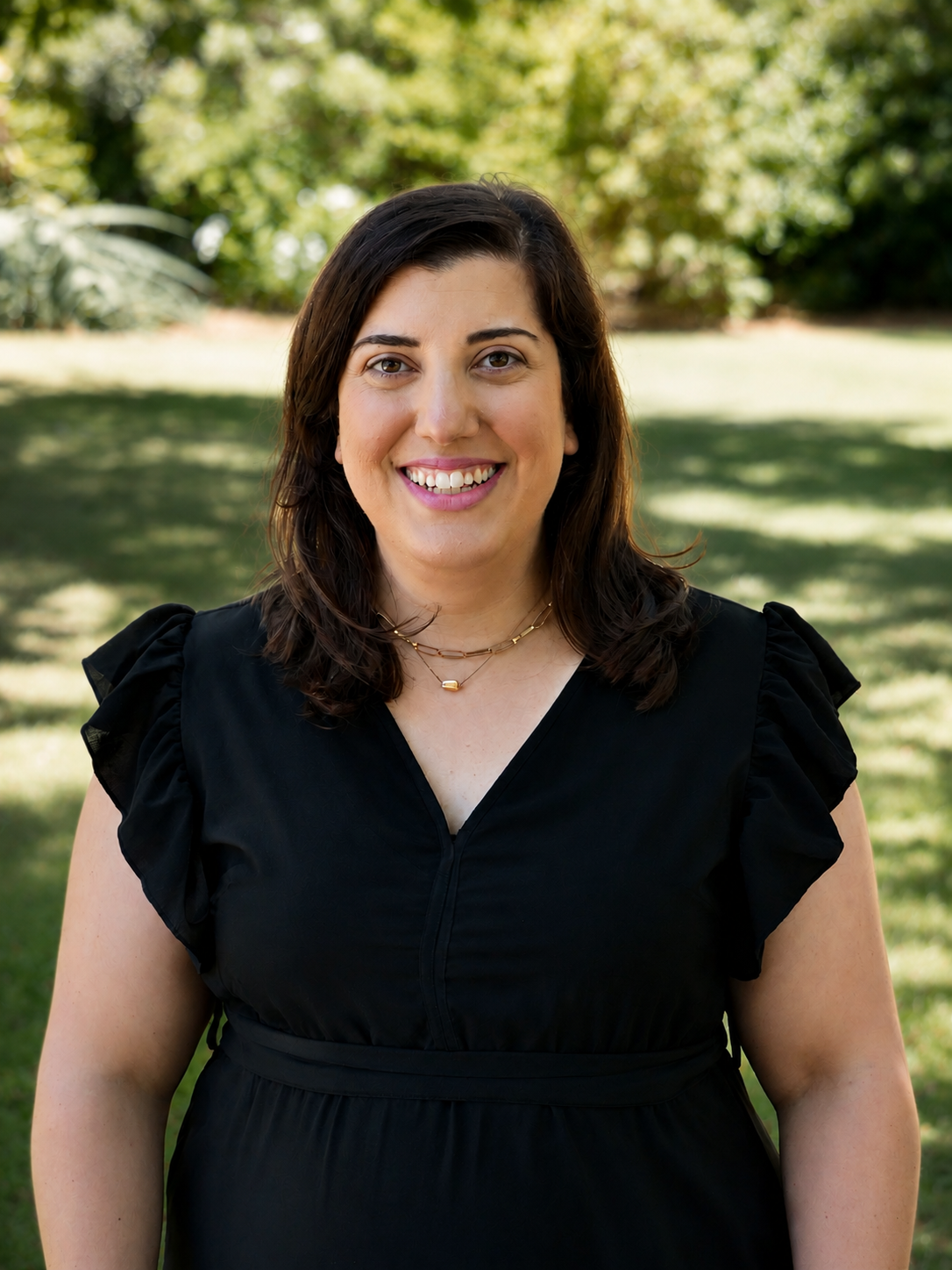
Hi, I’m Dr Celin Gelgec
Clinical Psychologist, AHPRA Board approved supervisor, and Director of Melbourne Wellbeing Group. I have been treating OCD since 2010, and have trained more than 500 clinicians across Australia for most of that time. What I have observed as a supervisor and clinician is consistent across experience levels, modalities, and professional backgrounds. Clinicians do not struggle with OCD treatment because they lack knowledge. They struggle because the model is harder to hold in the room than it is to understand on paper.
OCD does something specific in the therapy room. It creates doubt in the client, and it creates doubt us as clinicians.
That dynamic is real, it is common, and it is almost never named in training. It shows up as hesitation, as softened exposures, and as one extra explanation that tips into reassurance, and it is the thing that matters most in determining whether treatment progresses.
The training here is clinical, specific, and designed for the part of OCD treatment that no textbook fully prepares you for.
As seen and heard on:
Channel 7's House of Wellness | ABC Radio Melbourne | Triple R Radio | ABC Radio Sydney | The OCD Stories Podcast | Herald Sun Body and Soul | Breaking the Rules: A Clinician’s Guide to Treating OCD.
Clinician reflections after attending this workshop
“The training shifted how I think about accommodation, not just from families, but from me as a therapist as well.”
~ Anonymous
“One of the biggest shifts for me was learning how to stay grounded when clients become distressed during exposure work.”
~ Jacqui
“The differential diagnosis content completely changed how I assess OCD presentations.”
~ Carolyn
“I left with a far more focused approach to assessment and treatment planning.”
~ Mark
What if I already have some OCD training?
Most clinicians who come to Foundations do have some training. The programme is not built for people who have never heard of ERP. While it covers the treatment model, the programme is built for clinicians whose existing training has not yet bridged the gap between knowing the model and applying it with confidence in session.
If your previous training was primarily theoretical, delivered in a group format without individual supervision, or did not cover therapist factors, mental compulsions, or what to do when treatment stalls, Foundations is likely to cover ground your existing training has not.
If you have already treated OCD cases and are finding yourself stuck or working with complex presentations, the “Stuck” or “It's Complicated” pathways may be a better fit.

Five Modules, One Clear Path
Recognising OCD
What gets missed, minimised, or mistaken for something else entirely.
1
OCD presentation and themes/sub-types
Assessment and differential diagnoses
Focus on OCD and trauma, ADHD, Autism, OCPD, Eating Disorders, Perinatal Anxiety, and much more.
Building formulations to Guide Intervention
Translating assessment into behavioural treatment decisions.
2
Mapping obsessions and compulsions
Applying newer models to understanding OCD and its mechanism
Understanding the role of ACT in ERP
Using formulations to guide treatment planning
Designing and Running ERP
Moving from “understanding ERP” to holding it in the room.
3
Building a tool box with clients in preparation for ERP
Exposure menu development with theme-specific exposure examples
ERP for mental compulsions, rumination, and reassurance
Dealing with covert rituals
Therapist scripts and demonstrations
When and how to move into relapse prevention and maintenance.
Watching ERP in action.
Working with Stuckness, Ambivalence, and Emotional Pulls
What to do when ERP becomes emotionally difficult for the client or therapist.
4
Working with value conflicts
Working with shame, hesitation, doubt, anger, fear, disgust, guilt, etc.
How to hold the urge to rescue
What to do when ERP stalls and doubt shows up
Understanding the subtle ways treatment drifts off course.
5
Recognising and dealing with therapist accommodations
Recognising reassurance hidden inside therapy
Recognising and dealing with response prevention that stops functioning as response prevention
How to work with insight without behavioural change and when clients get stuck in intellectualising treatment
Dealing with family and partner accommodations
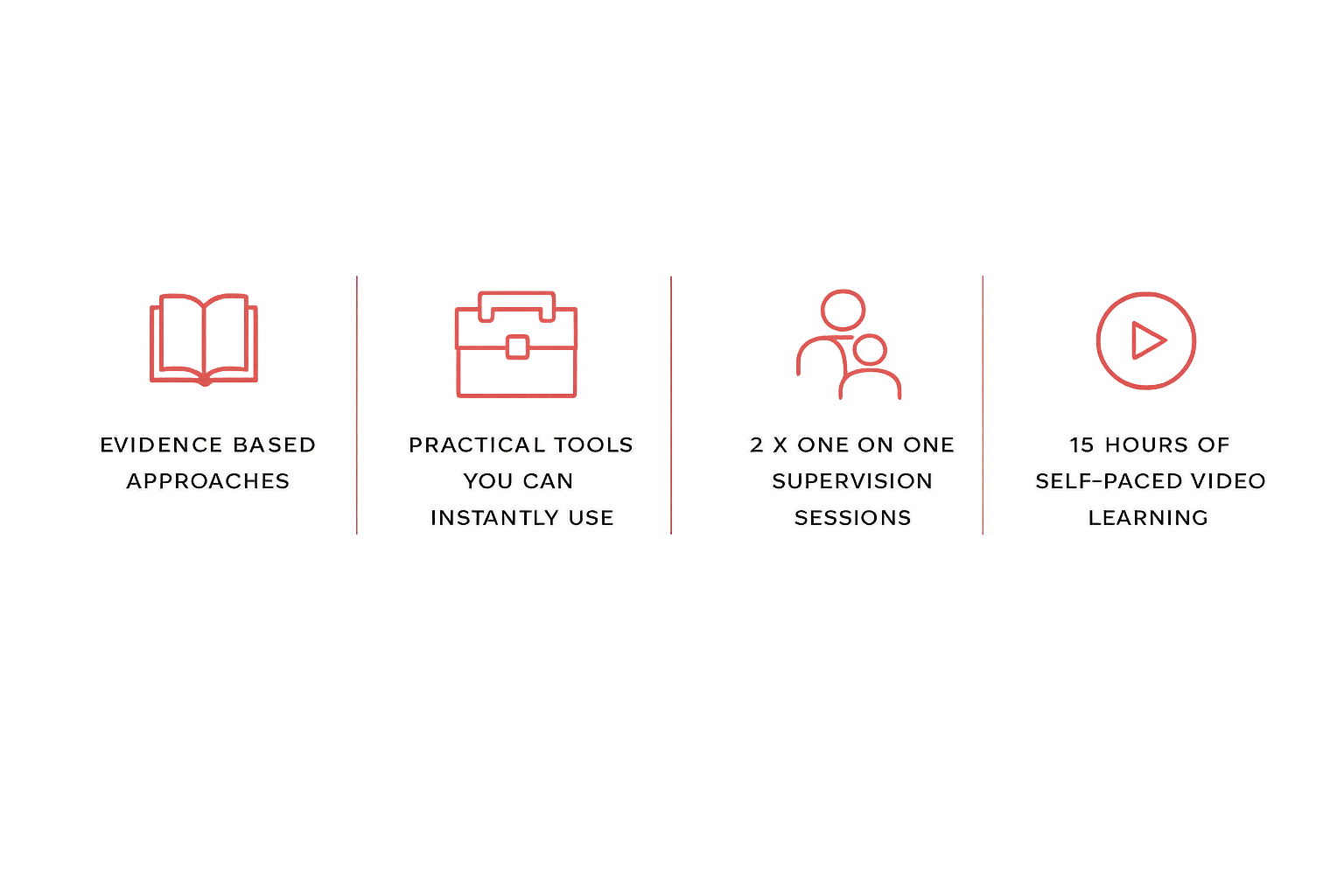
Across 15 hours of self-paced video training, the programme moves through real case material grounded in the inhibitory learning model and ACT-informed ERP, including presentations that are frequently missed, misdiagnosed, softened in treatment, or mistaken for something else.
The training focuses not only on understanding OCD, but on helping you become more intentional, structured, and confident in the decisions you make when doubt shows up in the room.

One to One Supervision
Once you’ve completed the online learning, you’ll book 2 × 50-minute 1:1 supervision sessions with me.
This is where we put the learning into practice. We’ll role-play the skills together so you can practise them live and receive immediate feedback. You can also bring a case that feels stuck, questions from the training, or a case where treatment has drifted.
These sessions are designed to bridge the gap between understanding the concepts and applying them confidently in real clinical work. You’re not just watching someone else do it, you get to practise it yourself so you can refine your skills.
Both supervision sessions are 1:1, they're not delivered in a group container and are included in the training. My usual supervision fee is $280 per session ($560 total value).
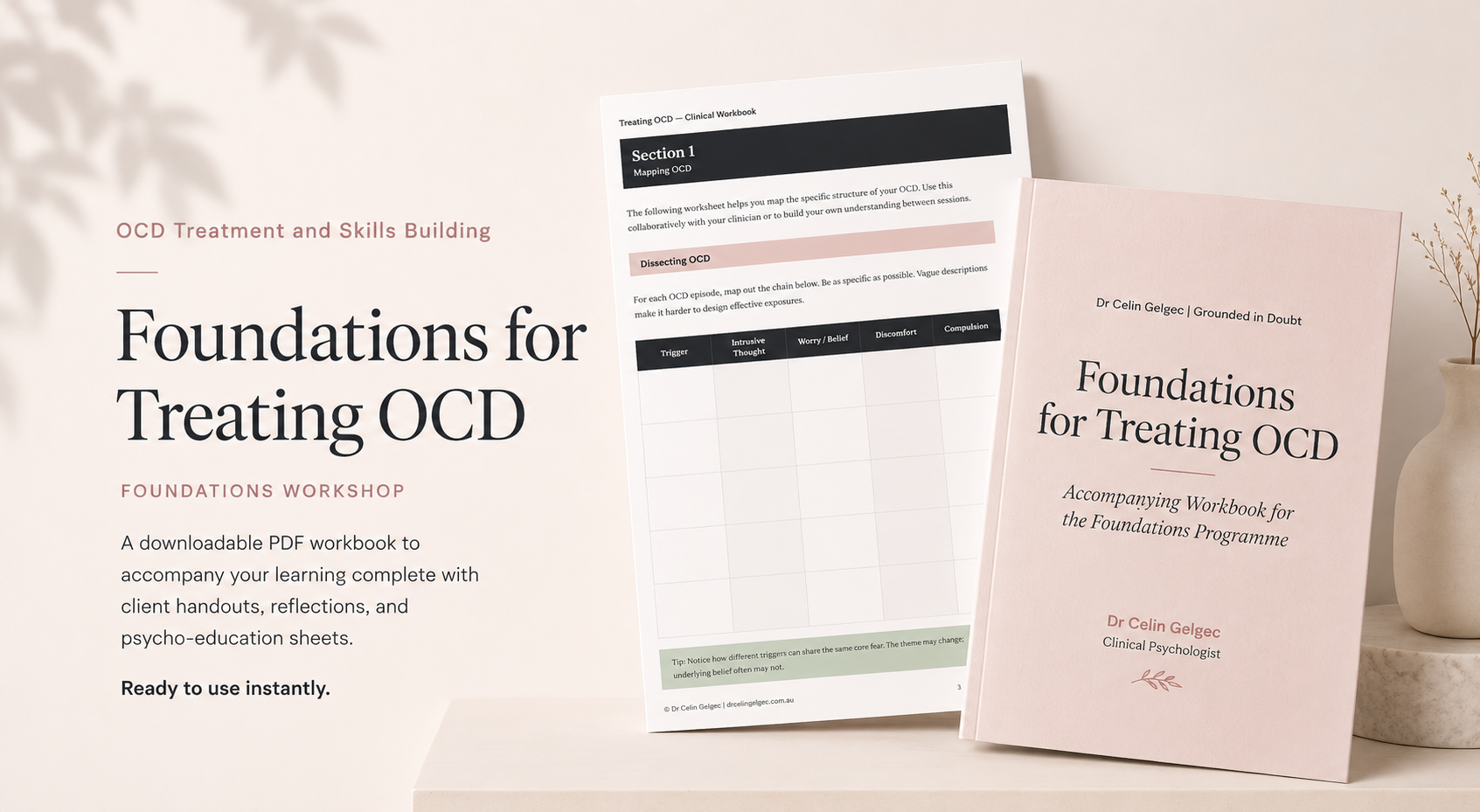
Your downloadable workbook ready to use with clients
Your Investment
Once you enrol, you'll receive immediate access to the learning portal, where you'll find:
5-modules of the Foundations programme across 15 hours of self-paced video learning
2 × 1:1 supervision sessions post-programme completion with Celin (usually valued at $560.00 total value for 2 sessions).
Ready to use downloadable PDF client workbook
$1360.00 (AUD) all inclusive.

Your Questions, Answered
-
$1,565 covers 15 hours of structured video content, clinical case studies, a client workbook, lifetime access to the materials, and 2 individual 50-minute supervision sessions with a Celin. If you were to book 2 individual supervision sessions alone at a standard clinical rate, you would be paying a significant portion of that cost for the sessions only, without the training content behind them. The programme is priced to reflect the full scope of what is included, not just the hours of video content.
-
Yes. Foundations does not assume prior OCD experience. It assumes clinical training and professional registration. The programme is built to give you a grounded clinical foundation for OCD treatment, and the supervision sessions are where that foundation gets tested against your actual caseload.
-
No. While the programme covers assessment, differential diagnosis, formulation, and exposure menu design, it also includes mental compulsions, therapist factors, motivational ambivalence, co-occurring conditions, and what to do when the work stops moving. The nuance is not an add-on. It is the structure the whole training is built around.
-
The programme includes 15 hours of video content, plus readings and case studies. You work through it in your own time, at your own pace. The 2 supervision sessions are scheduled after you complete the content and run for 50 minutes each.
-
The supervision sessions are included because OCD treatment rarely becomes difficult at the level of theory. Most clinicians already understand the principles of ERP. The harder part is applying them consistently once uncertainty, accommodation, therapist fear, or client distress enters the room.
The supervision component is designed to help bridge that gap between understanding the model and holding it clinically in practice. You are welcome to use the sessions however feels most useful: bringing a current case, reviewing a difficult moment in therapy, clarifying treatment direction, or working through parts of the material in more depth.
If you are primarily looking for self-study material without supervision, future training options may be a better fit.
-
The sessions are individual, 50 minutes each, and focused entirely on your clinical work. You can use them to discuss a current case, review treatment direction, work through difficult therapy moments, or clarify questions that emerged while completing the training material.
-
The programme is designed to meet 17 CPD points.
-
OCD is significantly underdiagnosed and frequently misidentified as generalised anxiety, health anxiety, or a mood disorder. Clinicians who complete structured OCD training consistently report recognising presentations in their existing caseload that they had not previously identified as OCD. The question may be less whether you see enough OCD clients and more around whether you are recognising cases when they are in the room.