
Stuck Advanced training for OCD Treatment
A self-paced online training program for clinicians who work with OCD and want a clear framework for recognising when treatment has drifted away from the formulation, understanding what is maintaining that drift, and deciding what to do next.
We're doing the work, so why isn't treatment progressing?
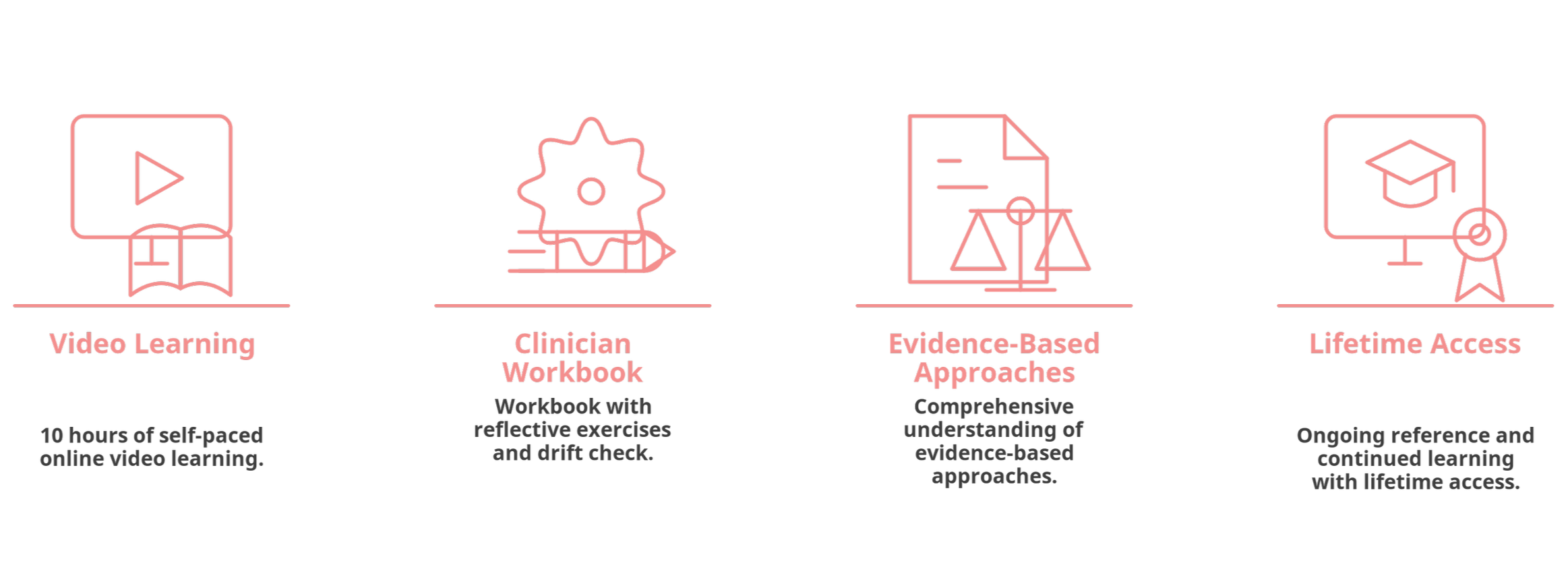
WHAT’S INCLUDED IN THE COURSE
I know why you’re here
By the time you arrive here, you already understand OCD. You can formulate it, identify compulsions, and run ERP. The difficulty is no longer about understanding OCD. The difficulty is what happens when treatment stops progressing.
When that happens, you start wondering whether you’re missing something. Maybe it's trauma. Maybe it's ADHD. Maybe the client is not ready. Maybe you've missed something important.
The longer the case stays stuck, the harder it becomes to know whether you're looking at genuine complexity or treatment that has quietly drifted away from the formulation.

Hi, I'm Dr Celin Gelgec,
Clinical Psychologist and Board Approved Supervisor. Over the years, I've become increasingly convinced that many stalled OCD cases are not missing insight, psychoeducation, or understanding. They're missing a part of the formulation that is still actively impacting treatment.
When treatment stalls, that anchor can begin to loosen. Exposures become softer, reassurance becomes harder to spot, accommodations start sounding like support. None of this happens because clinicians lack skill.
It happens because doubt enters the room, and doubt rarely announces itself clearly. More often, it arrives sounding remarkably like good clinical judgement.
As seen and heard on:
Channel 7's House of Wellness | ABC Radio 774 | Triple R Radio | The OCD Stories Podcast | Herald Sun Body and Soul | Breaking the Rules: A Clinician’s Guide to Treating OCD.
Stuck was built around this problem. Not how to formulate OCD, but how to recognise when the formulation is no longer informing treatment and what to do when it isn't.
What People Are Saying
“This has been one of the most helpful supervision sessions I’ve ever had. Thank you!”
— Alexandra (Psychologist)“I now have a clear path and it’s been really helpful for me to explore this and learn how I’ve been getting stuck in sessions with my clients”.
— Julie (Psychologist)“Being able to work with someone who just gets OCD and understands it fully has been an eye opener and has really built my confidence in treating OCD”
— Ben (Psychologist)About the Training
Across 5 modules and 10 hours of self-paced online learning that you get instant access to, we'll explore the most common ways treatment drifts away from the formulation, why those drifts can be difficult to recognise, and how to reorient before months of thoughtful work stop producing meaningful change.
Using real clinical cases and practical frameworks, the programme helps you recognise treatment drift, understand what is maintaining it, and decide what to do next.
What You'll Walk Away With
In this training you’ll learn to identify subtle reassurance and accommodation, distinguish insight from behavioural change, navigate complexity without losing the OCD formulation underneath it, and make confident decisions when doubt enters the room.

5 Modules 5 Ways OCD Treatment Quietly Drifts Off Track
-
This module explores how therapist behaviour can quietly reshape treatment while still feeling clinically appropriate. We'll look at how doubt influences decision-making, why therapist drift is difficult to recognise from inside the work, and how to return to the formulation when you notice yourself moving away from it.
-
Some clients pull us into roles without either person fully recognising it's happening.
This module explores how personality structure and interpersonal dynamics can influence treatment, the roles therapists often find themselves recruited into, and how to maintain the formulation without becoming trapped inside those roles.
-
Some of the most difficult OCD cases involve more than OCD. Think trauma, ADHD, autism, eating disorders, grief, disgust, the peri-natal and post-natal period, family dynamics, and executive functioning difficulties can all shape how treatment unfolds.
This module explores how OCD interacts with complexity and how to keep OCD as the treatment target while still responding thoughtfully to the broader clinical picture.
-
By the time many clients arrive in therapy, OCD has already recruited a team. Partners reassure. Parents accommodate. Schools adapt. Therapists respond. Everyone is trying to help, and often they are.
This module focuses on recognising accommodation once it has become normalised, understanding how systems can unintentionally maintain OCD, and learning how to bring treatment back to the behaviours that keep the cycle going.
-
Perhaps the hardest judgement call in OCD treatment is knowing when a formulation needs revising and when it simply needs holding.
This module provides a framework for making that decision with greater clarity and confidence.
This is for you if…
You lready understand ERP and OCD formulation but continue to encounter cases that feel stuck.
You recognise yourself leaving sessions wondering why a case isn't progressing despite everyone's best efforts.
This programme is not for you if…
You are new to OCD treatment.
You have had limited exposure to ERP.
You are still building confidence with assessment and formulation.
In that case, Foundations is the better place to begin.
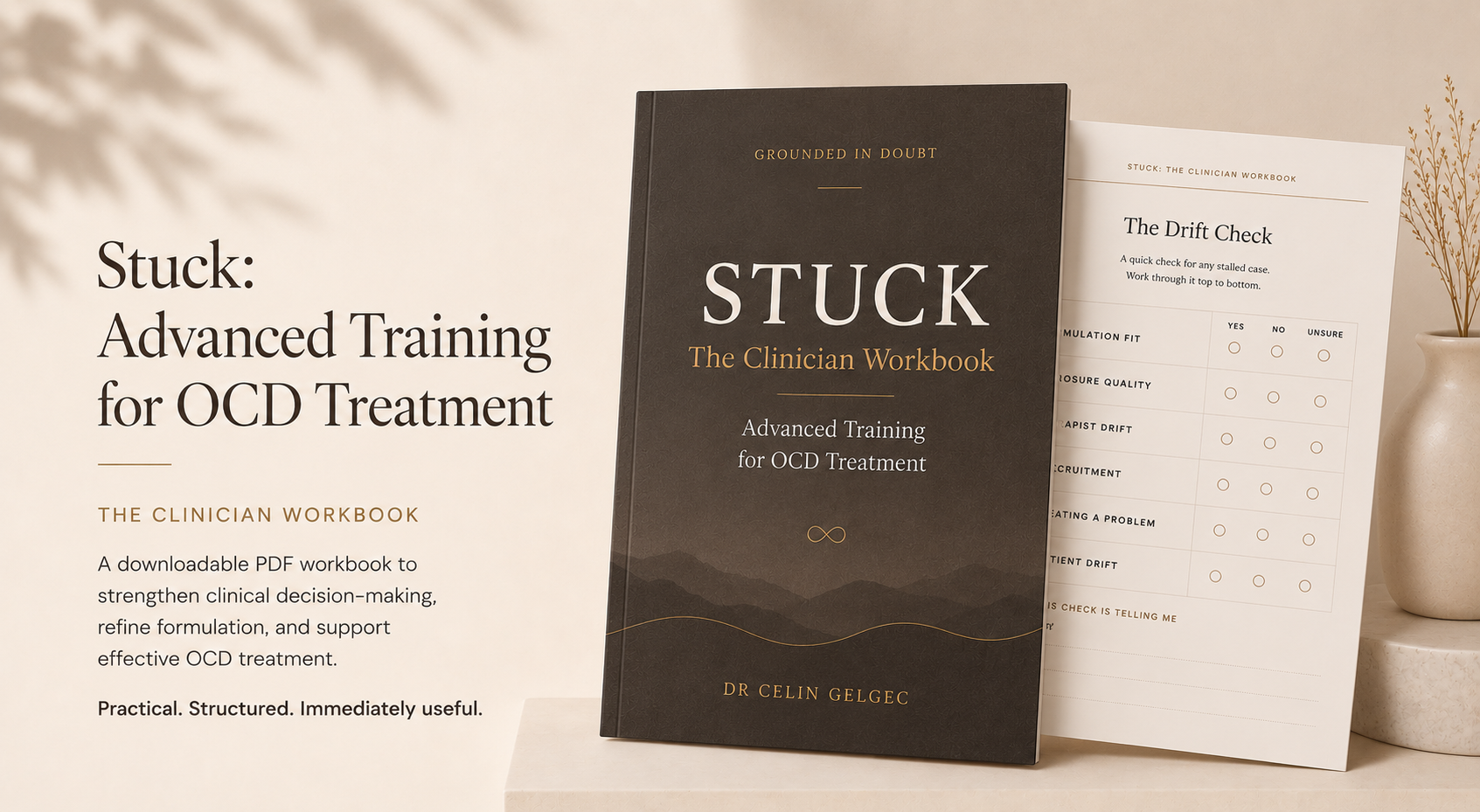
Your downloadable clinician workbook
Your Investment
Once you enrol, you'll receive immediate access to the learning portal, where you'll find:
5-modules of the Stuck programme across 10 hours of self-paced video learning
Your downloadable clinician workbook with reflective exercises, formulation audits, and decision-making frameworks
Lifetime access to all programme materials
$890.00 AUD

The formulation is only useful if it continues to shape what happens next.
Stuck was created for the moments when that becomes difficult.
Because understanding OCD treatment and holding onto it are two very different things.
Your Questions, Answered
-
No. Stuck assumes a working understanding of OCD assessment, formulation, and ERP. If you're newer to OCD work, Foundations is the recommended starting point.
-
Foundations focuses on the full treatment arc, from assessment through to ERP implementation. Stuck focuses specifically on what happens when treatment stalls and the formulation begins losing its influence over clinical decision-making.
-
No. If you're already confident with ERP and recognise the challenges described on this page, you can begin with Stuck directly.
-
No. Stuck is a self-paced training programme. If you're looking for support with a specific case, the It's Complicated supervision pathway may be a better fit.
-
Yes. The programme provides 10 CPD hours. You will receive a certificate for your records upon completion.
-
You can reach us anytime via our contact page. We aim to respond as promptly as we can.